

Spoilers ahead for Netflix’s Below.
The scariest thing about Netflix’s Below is not only the giant creature beneath Newfoundland’s icy waters. It is the possibility that the creature is a symptom of a much larger crisis. The six-part thriller wraps a sea-monster mystery around warming oceans, a coastal community under pressure, and powerful outsiders who see disaster as an opportunity.
That environmental layer gives the show a sting that lasts longer than a jump scare. The horror starts with something impossible in the water, then points toward a familiar source of danger: a changing climate and human decisions that leave vulnerable places with fewer ways to recover.

The monster is frightening—but the conditions that unleash it are worse
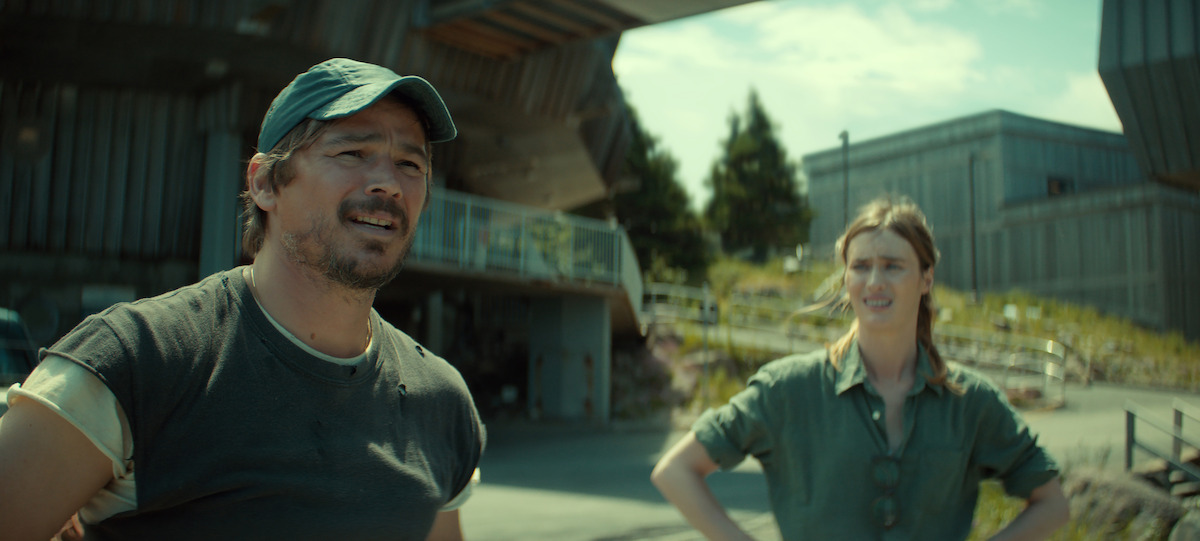
Calvin Penney (Josh Hartnett) is a struggling fisherman in Snook’s Arm, a small Newfoundland community. A mysterious force in the water threatens residents, while Calvin’s childhood trauma makes the danger personal. The story changes when marine researcher Fonda Howander (Mackenzie Davis) discovers that the creature, known as Mudder, is desperately trying to protect its young.
Mudder’s egg sac is trapped in an iceberg, and the surrounding water is too warm for the offspring to survive. As the ice melts and the creature’s biological material reaches the local water supply, the town experiences disturbing symptoms. What looks like a supernatural curse is connected to a disrupted natural system. Mudder is dangerous, but she is also responding to a habitat that no longer supports her young.
Climate change is not just background scenery
Icebergs are central to the plot and Calvin’s economic struggles. Early on, ice can look like a resource he might harvest and sell. By the finale, that image has changed. Ice is no longer just an opportunity; it is evidence of a larger system in motion, carrying secrets the town cannot easily control.
The final image of more icebergs appearing on the horizon refuses to let the crisis end neatly. Calvin and his family may have found a way to move Mudder and her egg sac into deeper, safer water, but they have not solved the forces that made the situation possible. The threat is bigger than one creature and bigger than one heroic decision.
This is where Below moves beyond a conventional monster story. An iceberg can look distant, beautiful, or commercially valuable while carrying consequences that only become clear when it reaches a community.

The corporate threat makes the climate story more uncomfortable
Below does not frame the town’s danger as a purely natural disaster. The Crocker family’s plan to force residents out and exploit the area adds another threat. While the town is distracted by fear and evacuation, the company sees an opening to secure control of the land.
That plotline raises an uncomfortable question: who benefits when a place becomes unsafe? Residents live with the consequences, while outside interests can treat the emergency as a business problem—or a convenient reason to remove people from valuable property. The series is not claiming every company behaves this way; it is showing how extraction and control can make a crisis worse for people with the least power.

Fonda’s discovery changes the meaning of the monster
Fonda investigates rather than treating the unknown as a target to destroy. Her research reframes Mudder as a living organism in crisis, not a villain with a plan to terrorize people. That does not erase the harm she causes, but it changes what a responsible response might look like.
A proposed military strike could devastate Mudder, the harbor, and the town’s ability to recover. Calvin realizes that destroying the creature might finish what the corporate plan began: making the community unlivable. Moving the iceberg and egg sac rather than simply killing the animal becomes an act of coexistence—and a rejection of the idea that force is always the easiest answer.
Why the ending hits harder than a jump scare
A jump scare gives viewers a short burst of fear and then releases it. Below’s ending offers no such comfort. Calvin has protected his family, but the final icebergs suggest that the larger conditions are still changing. The characters have bought themselves time; they have not restored a stable world.
The ending also mirrors Mudder’s struggle with Calvin’s own: she is trying to preserve her offspring in water that has become unsuitable, while he is trying to preserve his family and a community whose way of life is disappearing. The creature is fictional, but warming waters, changing ocean chemistry, and shifting marine habitats are real subjects of scientific research. Netflix’s own explainer on the creature discusses how temperature and ocean chemistry can affect marine life.
What Below is really saying about climate horror
The strongest reading of Below is not that nature is evil or every disaster has one cause. It is that people live inside systems they do not fully understand, and treating those systems as endless sources of money—or enemies to eliminate—can deepen the damage.
The most unsettling image may not be Mudder’s eye beneath the surface. It is the line of icebergs arriving after the town has begun to breathe again. The next crisis may already be on its way, and survival will depend on whether people respond with curiosity and care, or panic and exploitation.
Quick answer: What is Below’s climate message?
Below uses its giant sea creature and melting-iceberg mystery to explore how warming waters can disrupt habitats, threaten marine life, and make coastal communities more vulnerable. Its ending suggests that saving one town from one monster does not end the larger environmental crisis.
Frequently asked questions
Is climate change the reason Mudder appears in Below?
Within the show’s story, warming conditions and melting ice help unleash Mudder and endanger her eggs. The series uses that fictional chain of events to dramatize real concerns about changing ocean conditions.
Does Mudder want to destroy the town?
The finale reveals a more complicated motive: Mudder is trying to protect her offspring. Her actions still endanger people, but the story frames her as a mother in crisis rather than a simple evil monster.
What do the final icebergs mean?
They leave the danger unresolved and suggest more secrets or threats may be carried by the ice. The image reinforces the show’s climate theme: the conditions behind the crisis have not disappeared.
Is Below based on a true story?
No. The giant creature and the series’ specific events are fictional. Its environmental themes draw on real questions about ocean warming, changing water chemistry, and marine habitats.
Does Below have a confirmed Season 2?
No second season has been officially confirmed in the sources available at publication. The finale leaves room for more story, but that is not the same as an announced renewal.
Sources and further reading
- Netflix Tudum: Below ending explained
- Netflix Tudum: Could the sea creature in Below really exist?
- Reuters: Below’s Newfoundland setting and environmental themes
- Iceberg photograph and license details: Wikimedia Commons
Author: Shivam Das


