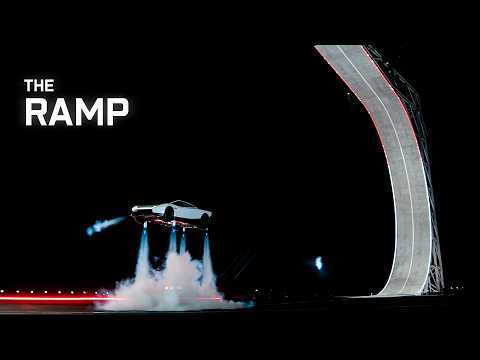
Tesla’s October 15 Roadster demonstration made a once-familiar science-fiction promise look briefly tangible: a car climbed an inverted ramp, lifted into the air and rotated before landing. The spectacle in McGregor, Texas, matters because it showed a tightly controlled prototype combining electric-car engineering with systems inspired by aerospace technology. It does not yet prove that flying cars are ready for ordinary commutes.
The useful question is not simply whether the Roadster “flew.” It is what the demonstration actually established, what remains a company claim, and what would have to change before a customer could safely use such a machine outside a test site.
What the demonstration showed
Coverage of the reveal described the Roadster driving up a curved ramp and continuing along an inverted section with help from a fan-based suction system. The prototype then left the ramp and used compressed-gas thrusters to rotate and land. In another sequence, it cleared a line of parked Tesla vehicles. The event also included a reported 0–60 mph run of about 0.81 seconds.
Those are extraordinary claims, but context matters: the car shown was a prototype, the stunts took place in a controlled setting, and the acceleration figure was presented at Tesla’s own event rather than independently certified in a production vehicle. Reuters and The Verge both emphasized the spectacle while noting the long development timeline and unresolved questions around production and public-road use.
Why this is more than a conventional electric-car launch
The system combines a battery-electric sports car with a fan-based system that Tesla said can hold the vehicle against an inverted surface, plus compressed-gas thrusters for brief aerial movement. In principle, the combination brings together traction control, vehicle dynamics and aerospace-style attitude control. In practice, the hardest engineering work begins after a successful demonstration: repeatability, fault tolerance, maintenance, heat and pressure management, occupant protection, and safe operation when conditions are less predictable.
A controlled stunt can show that a machine performed a maneuver once. It cannot by itself establish how reliably the system would work after thousands of cycles, in bad weather, during a component failure or with a paying customer aboard. Those are the questions that separate a memorable prototype from a product that can be certified and supported at scale.
What remains unproven
- Production readiness: the demonstrated prototype is not the same as a customer-delivered vehicle.
- Repeatable performance: the reported acceleration and aerial maneuvers need independent testing under clearly documented conditions.
- Regulatory approval: a car briefly leaving the ground does not automatically make airborne operation legal on public roads. Vehicle and aviation rules may both become relevant.
- Final price and delivery: Tesla has targeted production for 2028, but a target is not a guaranteed delivery date. Reservation deposits should not be mistaken for the final purchase price.
- Everyday usefulness: a short, staged jump is very different from sustained flight, practical range, and routine operation around other road users.
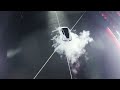
The Roadster’s longer history is part of the story
The next-generation Roadster was first previewed in 2017 and has faced repeated delays. That history makes the demonstration significant, but it also gives buyers a reason to separate a dramatic reveal from a firm production plan. The 2028 target is the latest schedule, and the final retail specification, price and delivery timing should be checked against Tesla’s current announcements as they develop.
The Roadster’s earlier development story also includes the original car’s connection to SpaceX-related publicity. A historical image of a Roadster associated with the Falcon Heavy payload helps explain why the car has long been tied to Musk’s aerospace ambitions, but it should not be confused with footage from the October 2026 event.

Watch the demonstration and follow the original posts
The video below provides event coverage of the Roadster demonstration. Social posts can offer first-hand material, but readers should still distinguish promotional footage and company claims from independent technical verification.
Tesla Roadster reveal coverage: prototype demonstrations and the next-generation Roadster’s unusual flight-style maneuvers.
— Teslarati (@Teslarati) View the original post on X
For the manufacturer’s current information, consult the official Tesla Roadster page. For independent reporting on the reveal, read Reuters’ event report and The Verge’s demonstration breakdown. See also our Tesla Roadster event recap for a separate account of what happened on stage.
Bottom line: closer to a demonstration than a flying-car revolution
Tesla has given the public a striking look at what a specialized prototype can do when electric-car engineering is paired with aerospace-inspired systems. That is a meaningful demonstration. It is not yet proof that a practical, road-legal flying car is ready for mass production. The next milestones are less cinematic but more important: repeatable independent tests, final specifications, certification, a credible delivery schedule and clear safety limits.
Frequently asked questions
Did the Tesla Roadster really fly?
The prototype briefly left a ramp and performed aerial maneuvers during the October 15, 2026, demonstration. That does not prove it can function as an everyday flying car.
How fast did the Roadster accelerate?
Tesla presented a 0–60 mph run reported at about 0.81 seconds. The figure should be treated as a demonstration claim until independently tested on a production vehicle.
Can people drive or fly it on public roads now?
The demonstration does not establish approval for public-road airborne operation. Regulatory and safety questions remain, and the prototype is not evidence of a currently available, certified flying car.
When is the new Roadster expected to enter production?
Tesla has targeted 2028, but that schedule can change. Prospective buyers should rely on updated official announcements rather than treat the target as a guaranteed delivery date.
Has Tesla announced the final price?
Final retail pricing should be confirmed through Tesla’s current official information. A reservation deposit is not the same as the vehicle’s full purchase price.
Editorial note: This article separates the demonstration and reported company claims from independently verified production capabilities. The historical image is explicitly labeled as context, not event footage.