
Updated October 26, 2026 · By Shivam Das
Quick answer: There is no reliable, independently verified public dataset showing average Night 5 clear times for solo players versus squads in Roblox The Hollow. Solo runs give you control over every decision; a coordinated squad can divide navigation and clue-checking, but extra players can also create confusion. To find the faster option for your own run, compare the same objective under similar conditions and time each stage instead of trusting an unverified “fastest clear” claim.

Table of Contents
- What is confirmed about Night 5?
- Solo vs. squad: the real trade-offs
- How to measure clear time fairly
- Best solo strategy
- Best squad strategy
- Mistakes that slow down both modes
- Which option should you choose?
- Frequently asked questions
What is confirmed about Night 5?
Roblox's official announcement describes The Hollow as a shared Halloween survival event running across nine days, with a different horror-game monster appearing each day. Players navigate a maze, search for clues, evade the threat, and complete quests for avatar items and other rewards. Roblox has announced a live finale for the morning of October 31 and says rewards remain collectible until noon Pacific Standard Time on November 2, 2026.
The official announcement lists the nine featured monsters, but it does not publish a verified solo-versus-squad time study or a universal clear-time leaderboard. Community schedules have differed on the exact monster order, so use the live event hub to confirm the current floor, monster, puzzle, and reward requirements before relying on a Night 5 walkthrough.
For this guide, “clear time” means the time from entering the active maze to completing the objective and reaching the required return point. If the floor uses a different completion condition, follow the in-game instructions and use the same start and finish points for every test. A full clear should not be compared with a partial run.

Solo vs. squad: the real trade-offs
| Factor | Solo | Coordinated squad |
|---|---|---|
| Decision-making | One player chooses the route; no debate. | Fast if one person calls directions, slow if everyone argues. |
| Clue coverage | You must search and remember clues yourself. | Players can divide search tasks if the objective allows it. |
| Route memory | One consistent mental map. | A navigator can share landmarks with the group. |
| Communication | No voice coordination required. | Useful callouts help; overlapping chatter distracts. |
| Risk management | You control your movement and route. | Teammates may warn each other, but can also draw danger toward the group. |
| Repeatability | Easy to compare your own attempts. | Results depend on roles, teammates, and communication. |
Neither format is automatically faster. A solo player who understands the puzzle may beat a squad that spends minutes choosing a route. A coordinated team may be more efficient when clues are spread out and the game lets players search separately without losing progress. Before splitting up, confirm whether progress is shared and whether a death resets an objective.
The key variable is wasted movement, not headcount alone. Rechecking the same room, forgetting a clue, taking a wrong corridor, or returning without the required information can add more time than solo-versus-squad differences.
How to measure clear time fairly
If you want a useful answer for your account, run a repeatable test. Do not compare a solo attempt from a fresh server with a squad attempt where one teammate already knows the puzzle solution.
- Use the same start and finish points. Start the timer when you enter the maze; stop it when the objective is complete and you reach the required return point.
- Record the floor and objective. Note the floor label, puzzle type, and special rules. Do not mix different floors in one comparison.
- Keep conditions similar. Use the same device, connection, graphics settings, and level of route familiarity where possible. Note lag spikes or server interruptions.
- Repeat each format. Try at least three attempts in solo and squad modes if time allows. Record deaths, resets, missed clues, and successful clears separately.
- Compare median times. Sort successful clear times and use the middle result instead of relying on one lucky personal best.
- Track failed attempts too. A method with one fast clear but frequent failures may be worse for collecting rewards than a slightly slower, consistent method.
| Run | Mode | Clear time | Deaths / resets | Main delay |
|---|---|---|---|---|
| 1 | Solo or squad | Record time | Record count | Wrong turn, puzzle, lag, chase |
| 2 | Solo or squad | Record time | Record count | Record main delay |
| 3 | Solo or squad | Record time | Record count | Record main delay |
Calculate the difference as squad median time − solo median time. A positive result means the squad was slower in your test; a negative result means the squad was faster. This is a measurement of your own attempts, not a platform-wide statistic. We are not publishing a made-up “solo clears in X minutes” figure because a verified public benchmark is not available.
Best solo strategy
1. Read the objective first
Identify what you must collect, solve, or return before entering the maze. Finding the puzzle room may not complete the task; you may need to activate it, collect an item, and return safely.
2. Navigate by landmarks
Remember distinctive doors, lights, unusual rooms, and junctions. A route remembered only as “left, right, straight” can fail if the spawn or layout changes. Treat each new maze as a fresh map.
3. Search systematically
Clear one branch at a time and note where you have already looked. A perimeter-first approach can reduce repeat searches in some layouts, but it is not guaranteed to work on every floor. Follow clues in the current run instead of assuming an older walkthrough matches your server.
4. Plan before a chase
Decide your next move before entering a risky section. If the monster is close, prioritize movement and survival over checking every corner. Review your route again when you reach a safer spot.
5. Keep the return trip in mind
Once you have the required object, skip optional rooms unless they are part of the objective. Identify the route back while the maze is still fresh in your memory. A solved puzzle is not a successful clear if you cannot return.

Best squad strategy: assign roles before entering
A squad is most useful when everyone has a clear job. Agree on a short plan and one person who makes final route calls. Avoid sending everyone in different directions unless the objective allows it and everyone knows how to regroup.
- Navigator: calls turns and remembers the way back.
- Clue checker: reads symbols, signs, and puzzle instructions clearly.
- Route recorder: tracks searched rooms and remaining branches.
- Coordinator: confirms the final step and keeps the group together when carrying or returning an item.
For a two-player team, combine roles: one player navigates while the other reads clues and tracks searched rooms. Larger groups do not need more roles than the game needs. Four players all directing the route can create more confusion than four players following one clear caller.
Use short callouts such as “left junction cleared,” “puzzle room ahead,” or “return to entrance.” Avoid vague directions, and repeat important puzzle details once so everyone hears them. Agree on a regroup point before separating. Most importantly, confirm whether progress is shared: if every player must interact with the same object or a death resets the puzzle, splitting up may cost more time than it saves.
Mistakes that slow down both modes
- Using an outdated guide: Check the current objective and floor before following a video from another day.
- Trusting an unverified speedrun: A clip without a visible start, finish, and full attempt cannot prove a record.
- Searching rooms twice: Track explored branches or assign one player to do so.
- Ignoring puzzle clues: Read instructions before randomly interacting with objects.
- Splitting up without a regroup plan: Separate only when it helps the objective.
- Forgetting the reward claim: Verify that the quest is complete and the item is claimed or owned.
- Blaming every slow run on ping: Record whether the delay came from lag, route errors, or unclear communication.
Which option should you choose?
Choose solo if you prefer quiet runs, already understand the puzzle, or want to learn the maze without coordinating. Solo also makes it easier to measure your own improvement across repeat attempts.
Choose a squad if your friends communicate clearly, divide tasks sensibly, and follow one route caller. A team can help when one player is good at puzzles and another is good at navigation. Do not assume a random public group will be faster simply because it has more players.
For reward-focused players: prioritize a successful, repeatable clear over a personal-best time. Roblox says event rewards come from completing quests, so confirm the actual requirement in the live hub and check that the item is claimed. The finale is scheduled for the morning of October 31, and rewards remain collectible until noon Pacific Standard Time on November 2, 2026.
Official links and source notes
- Roblox Newsroom: The Hollow Halloween survival event — official event format, roster, finale, and reward deadline.
- The Hollow on Roblox — check the live hub for the current floor and quest.
- Roblox Developer Forum announcement — official forum version of the announcement.
- Gamezebo's The Hollow quest guide — third-party context; check its date before using a route.
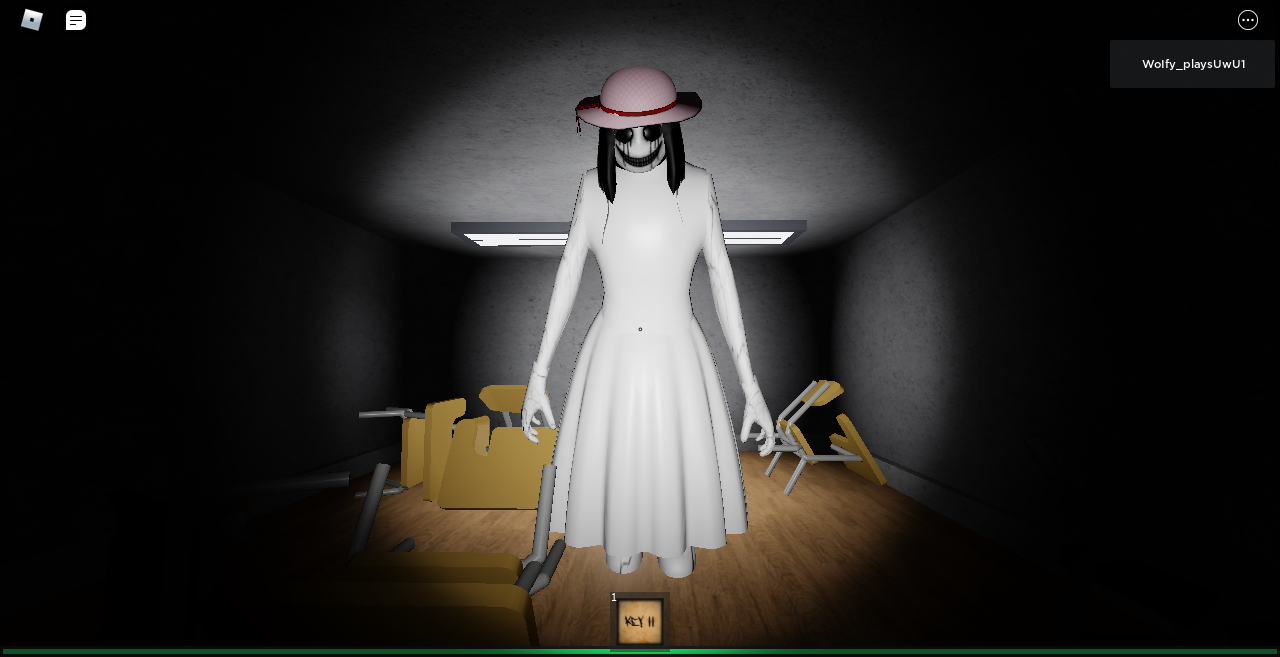
Reporting note: Roblox has not published official average clear times for solo and squad runs. This guide compares the practical trade-offs and gives readers a repeatable test instead of presenting invented times as fact. Images are related Roblox horror-game illustrations and gameplay references, not proof of the current floor layout.

Frequently asked questions
Is solo faster than squad in The Hollow Night 5?
Not in every run. Solo avoids team communication delays, while a coordinated squad may divide clue-searching and route-tracking. The faster option depends on the objective, player familiarity, and teamwork.
What is the average Night 5 clear time?
There is no reliable, independently verified public average for solo versus squad clears. Record several comparable attempts and compare median successful times.
Does Night 5 definitely feature Hiachi?
Roblox includes Hiachi in the nine-monster lineup but does not publish a complete date-by-date order in its announcement. Check the current in-game hub rather than treating a fan schedule as official.
Should a squad split up to find clues faster?
Only if the live objective allows it and the team understands whether progress is shared. Assign a navigator and clue checker, and agree on a regroup point.
How can I improve clear time without more failures?
Read the objective, track searched branches, use landmarks, avoid detours after finding the required item, and plan the return route before leaving the puzzle room.
When do The Hollow rewards stop being claimable?
Roblox says rewards remain collectible until noon Pacific Standard Time on November 2, 2026. Verify item requirements in the live hub and claim them before the cutoff.

